PolyJet Digital ABS
Digital ABS (Digital ABS Plus) is a tough PolyJet material that simulates standard ABS plastic. The printer builds it by combining two Stratasys photopolymers in a fine pattern as it prints. As a result, it has much higher impact strength and heat resistance than standard Vero, with the same fine detail and smooth surface. We print Digital ABS in ivory.
What Digital ABS Is Best For
- Functional prototypes that need ABS-like toughness
- Snap fits and parts that will be assembled and taken apart
- Housings, casings, and covers
- Parts that see moderate heat
- Mold and tooling prototypes
- Assembly and inspection fixtures
When another material is a better fit
- Real ABS thermoplastic: FDM ABS-M30
- Tough production parts: MJF Nylon 12
- Fine-detail appearance models in white: Vero
- Parts used well above 150°F (65°C): High Temp resin
Key Material Facts
- Simulates standard ABS; notched Izod impact of 90–115 J/m, about four times standard Vero
- Heat deflection temperature of 58–68°C (136–154°F) as printed
- Elongation of 25–40%, so snap fits and thin features can flex
- We print it in ivory, and we can paint parts if you need a specific color
- Also, like other photopolymers, it can become more brittle and change color over time, especially with UV exposure
- Layers as fine as 0.0006″ (16 µm) for crisp detail
Digital ABS Material Properties
Version note: we print Digital ABS Plus from Stratasys. Values below come from Stratasys’ Digital ABS Plus data sheet (MDS_PJ_DigitalABSPlus_0521a).
Typical values from Stratasys’ published data sheet.
| Property | Value | Method |
|---|---|---|
| Tensile strength | 55–60 MPa (8,000–8,700 psi) | ASTM D638 |
| Elongation at break | 25–40% | ASTM D638 |
| Modulus of elasticity | 2,600–3,000 MPa (375,000–435,000 psi) | ASTM D638 |
| Flexural strength | 65–75 MPa (9,500–11,000 psi) | ASTM D790 |
| Flexural modulus | 1,700–2,200 MPa (245,000–320,000 psi) | ASTM D790 |
| Heat deflection temperature @ 0.45 MPa | 58–68°C (136–154°F) | ASTM D648 |
| Heat deflection temperature @ 1.82 MPa | 51–55°C (124–131°F) | ASTM D648 |
| Notched Izod impact | 90–115 J/m (1.69–2.15 ft·lb/in) | ASTM D256 |
| Glass transition temperature (Tg) | 47–53°C (117–127°F) | DMA |
| Shore hardness | 85–87 D | Scale D |
| Rockwell hardness | 67–69 M | Scale M |
| Polymerized density | 1.17–1.18 g/cm³ | ASTM D792 |
More information on Digital ABS is available from Stratasys, the material manufacturer.
Designing Parts for Digital ABS
Because Digital ABS is tougher than standard Vero, snap fits, clips, and thin walls hold up better to handling. However, it still is not as tough as molded ABS or nylon. So if a part will see repeated heavy loads, ask us about MJF Nylon 12.
PolyJet builds parts up to 19.7″ × 15.7″ × 7.9″ in one piece, with layers as fine as 0.0006″ (16 µm). For larger parts, we print in sections and bond them together. Our PolyJet Part Design Guide covers wall thickness, clearances for assemblies, living hinges, and combining rigid and rubber-like materials in one part.
Finish and Color Options
Digital ABS parts are printed in ivory. We ship PolyJet parts with the support material removed. PolyJet parts come off the printer smooth, with fine layer lines that sand out easily. Sanding, priming, painting, and threaded inserts are available on request and quoted per part. See all of our finishing and post-processing options.
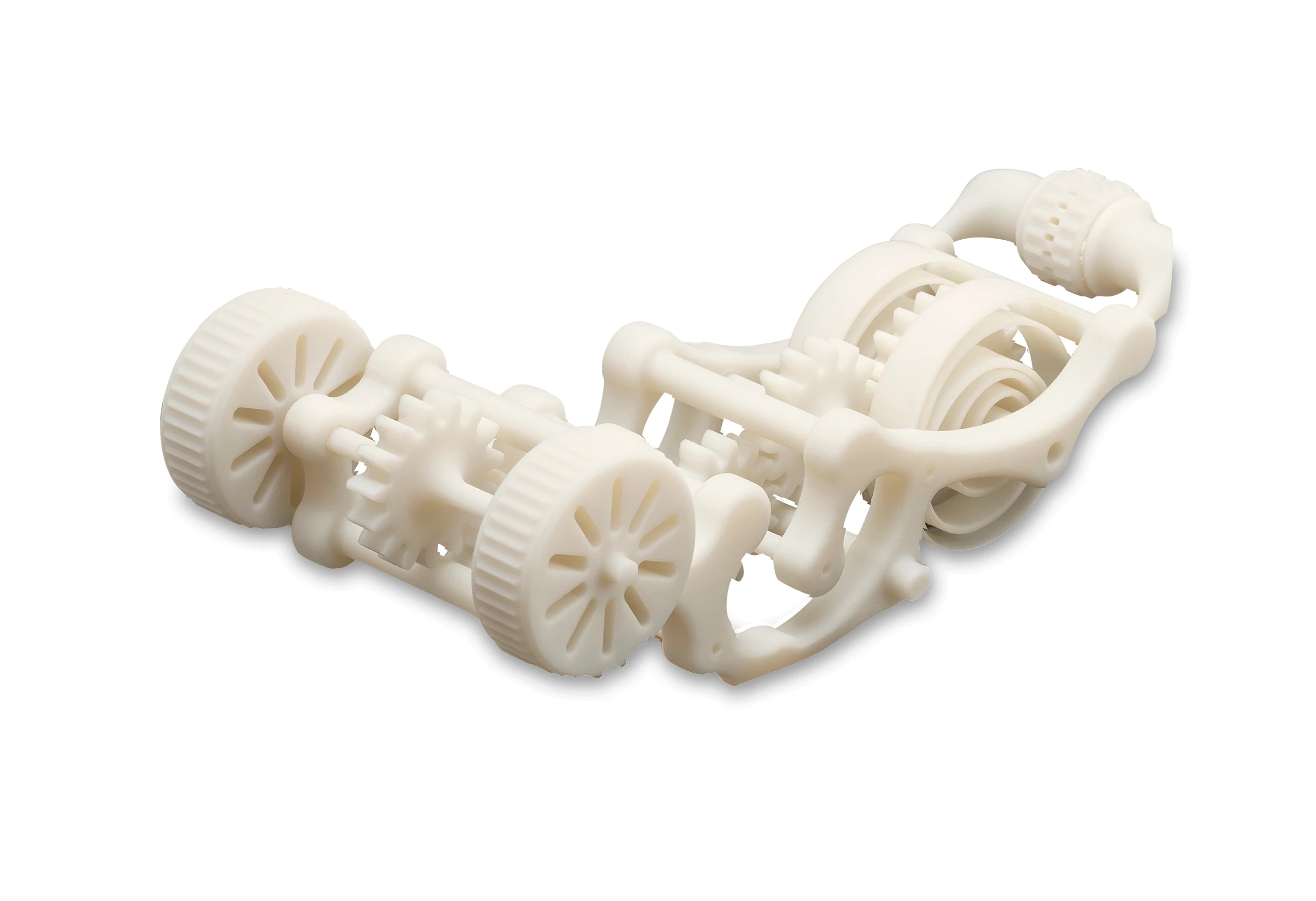
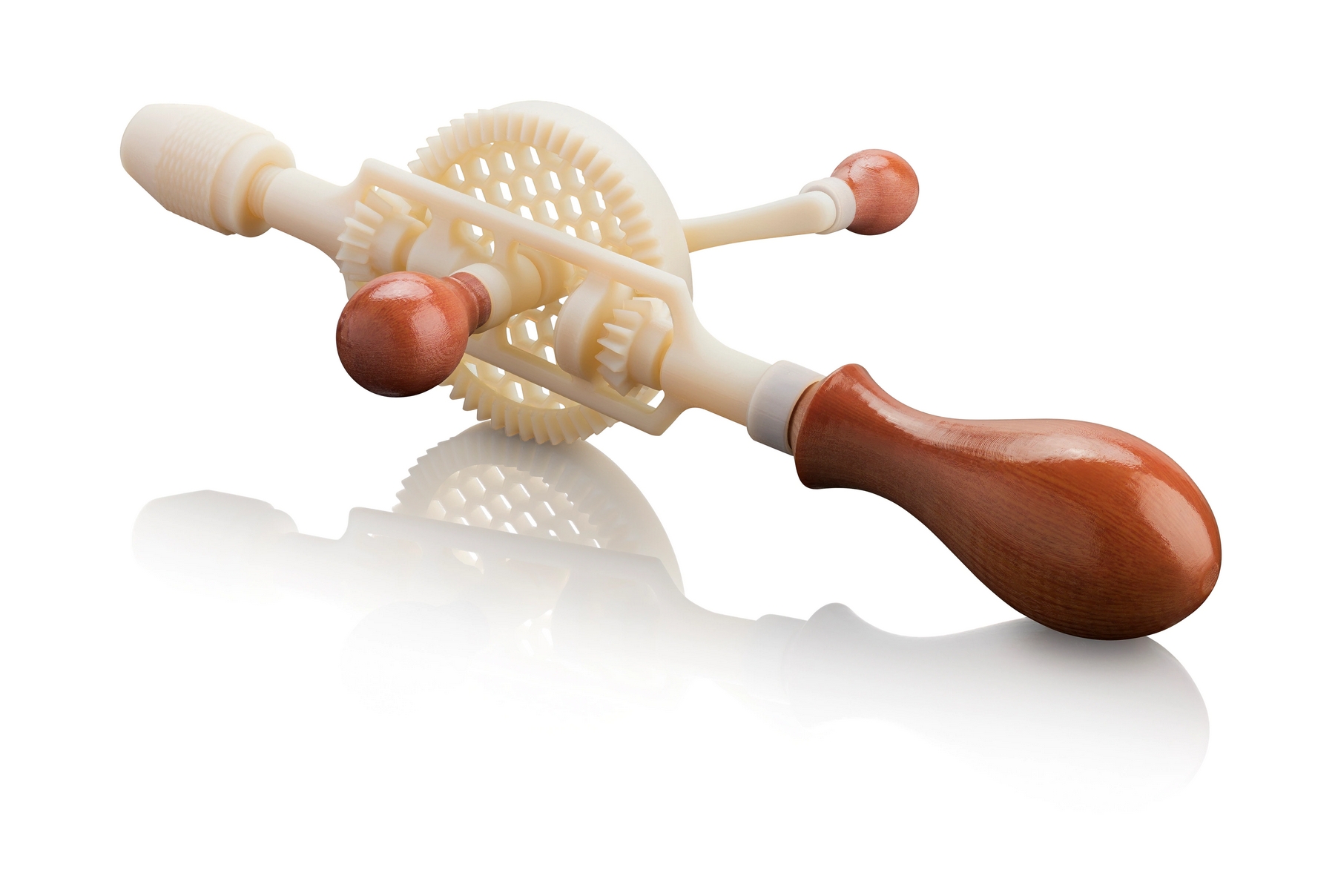
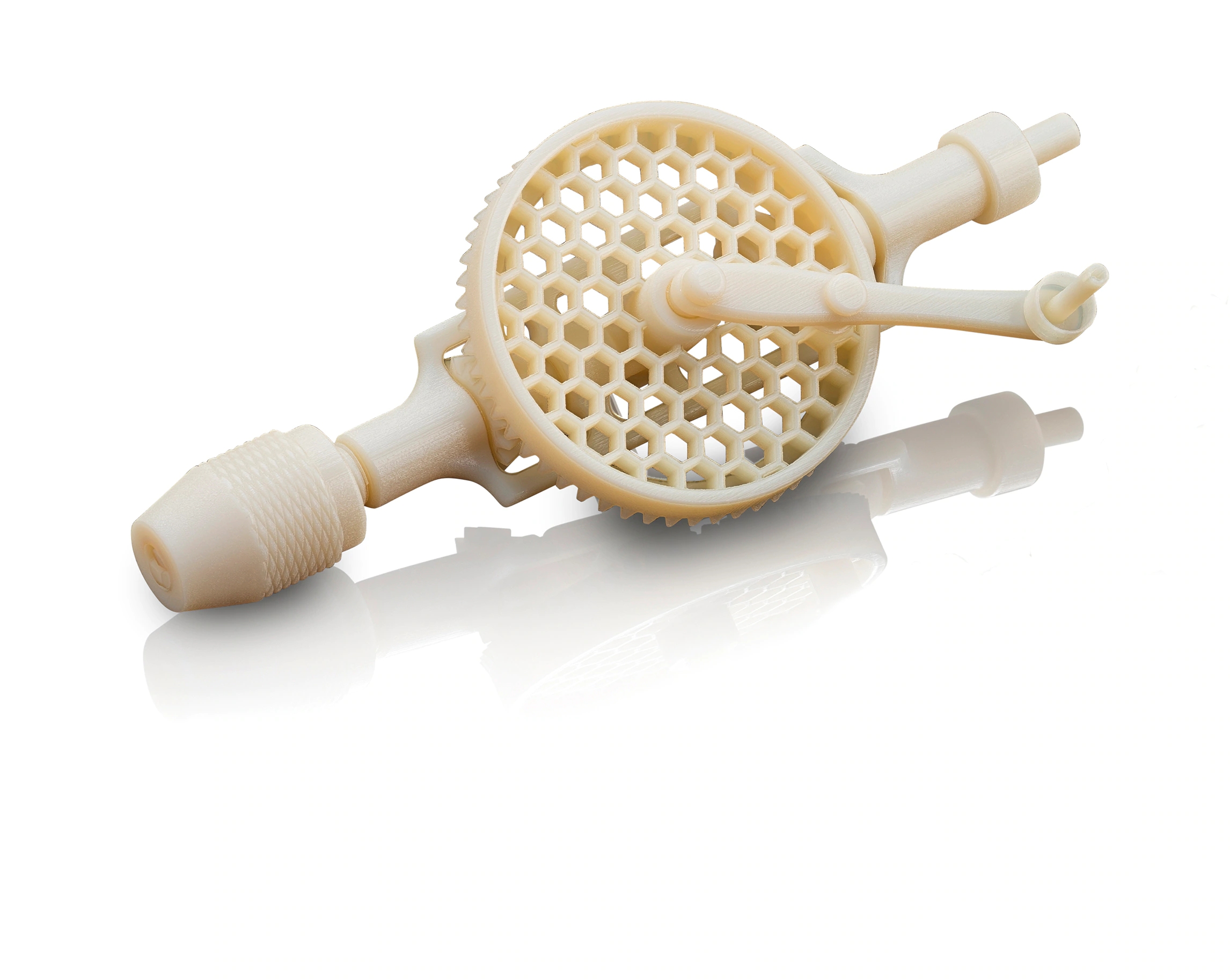
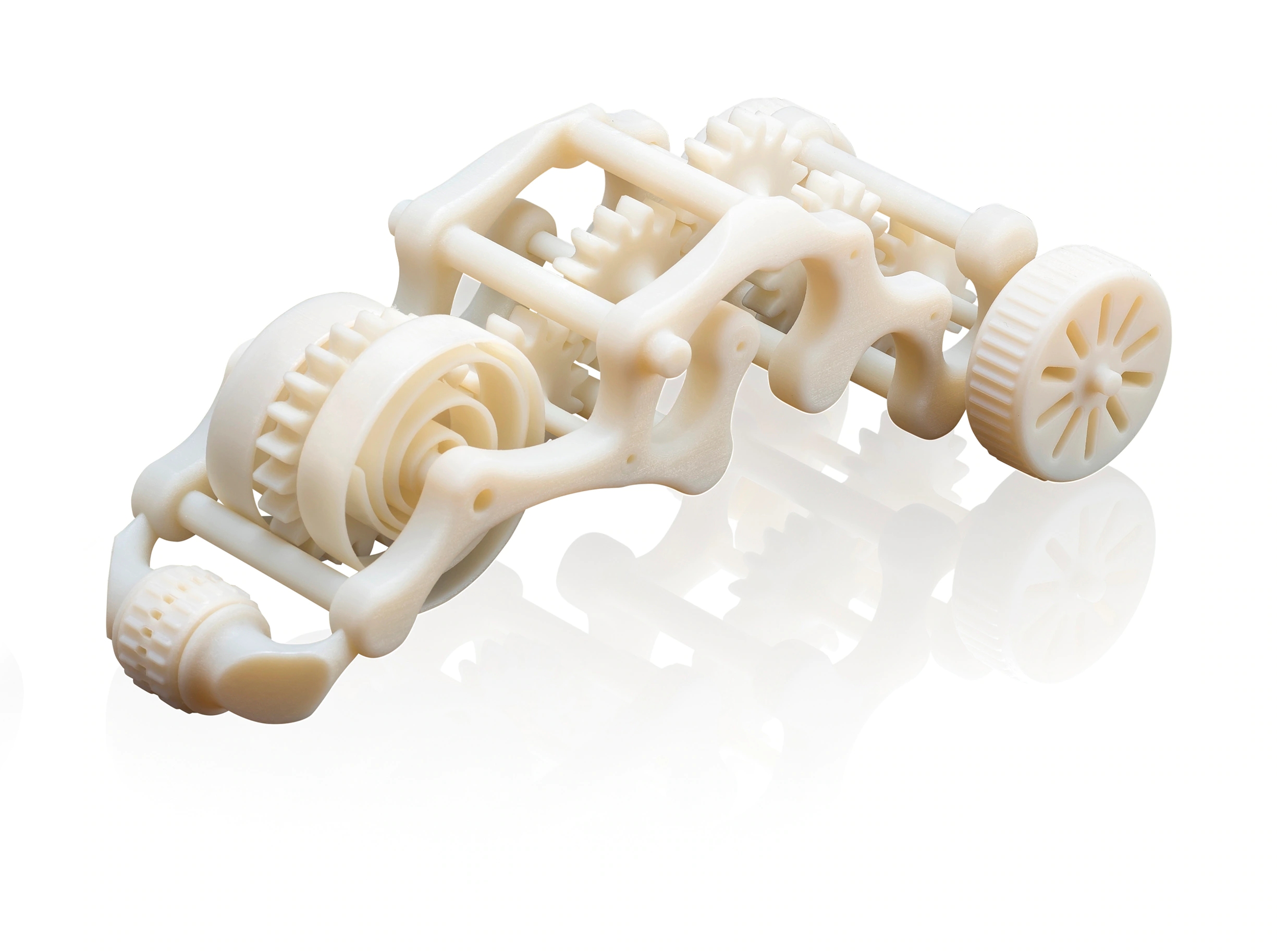
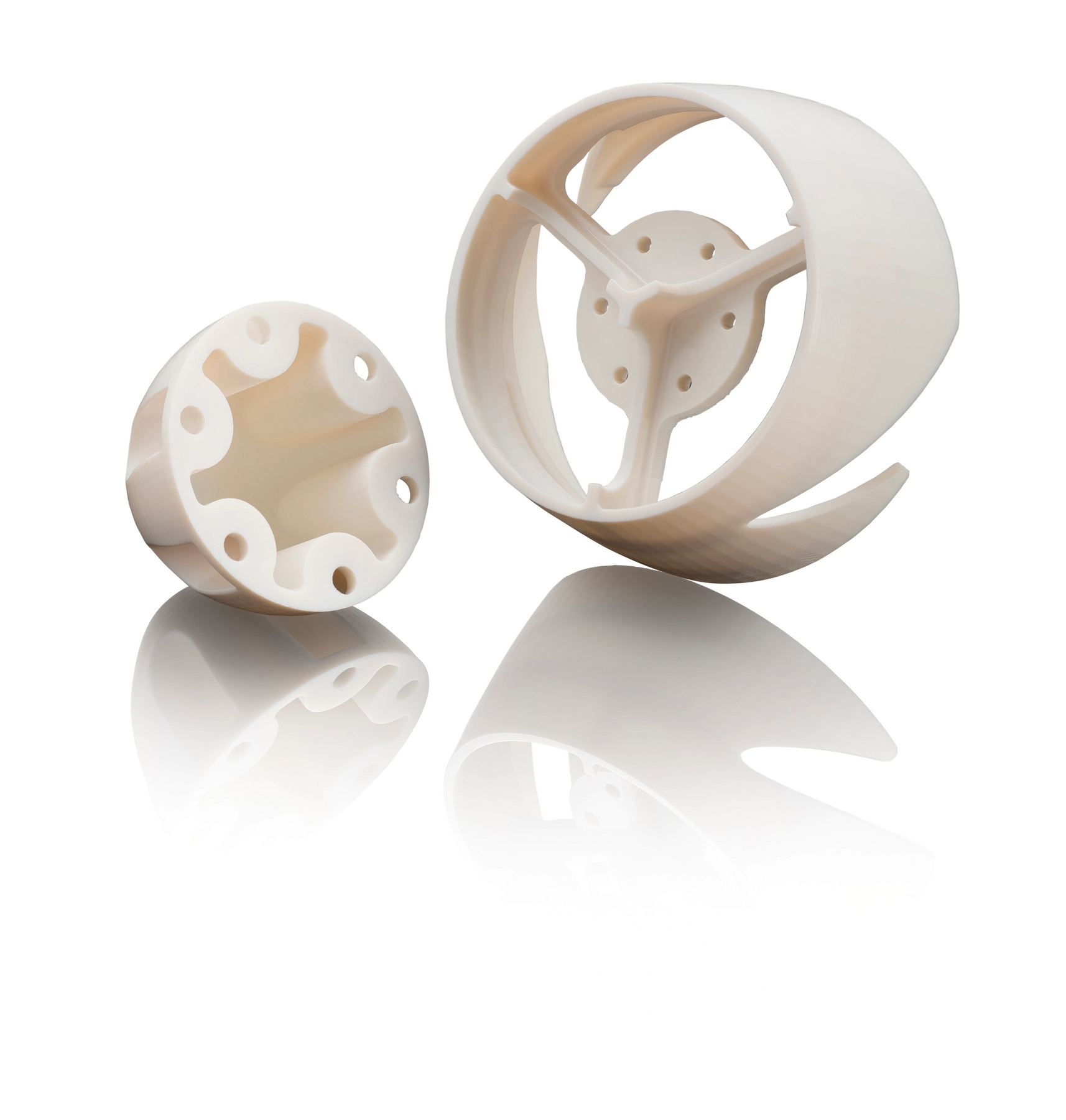
Digital ABS Part Gallery
Example Digital ABS parts. Photos courtesy of Stratasys.
Related Resources
- PolyJet 3D printing overview
- PolyJet part design guide
- Accuracy of 3D printed parts
- Machine and material comparison
If you like what you see...
You should sign up for our quarterly email newsletter! We send out a summary of all the latest testing videos, design guides, and anything else cool that has been added to the F3DP website 4 times a year.
We hate spam as much as you do so we only send all killer content and no filler BS!